BA-31 is a synthetic, mitochondria-targeted tetrapeptide studied for its interactions with cardiolipin, a phospholipid found in the inner mitochondrial membrane. Its specialized structure has made it a subject of interest in laboratory settings focused on mitochondrial function, cellular energy production, and oxidative stress.
In scientific studies, BA-31 is utilized to investigate mechanisms related to mitochondrial electron transport, ATP synthesis, and membrane integrity. Researchers continue exploring its effects on mitochondrial function in experimental models involving disrupted energy metabolism and cellular stress.
$49.99 – $84.99Price range: $49.99 through $84.99
BA-31 is a synthetic, mitochondria-targeted tetrapeptide offered by Bakersfield Aminos for laboratory research. Its interactions with mitochondrial membranes make it a subject of interest in investigations involving cellular energy production, oxidative stress, and mitochondrial function.
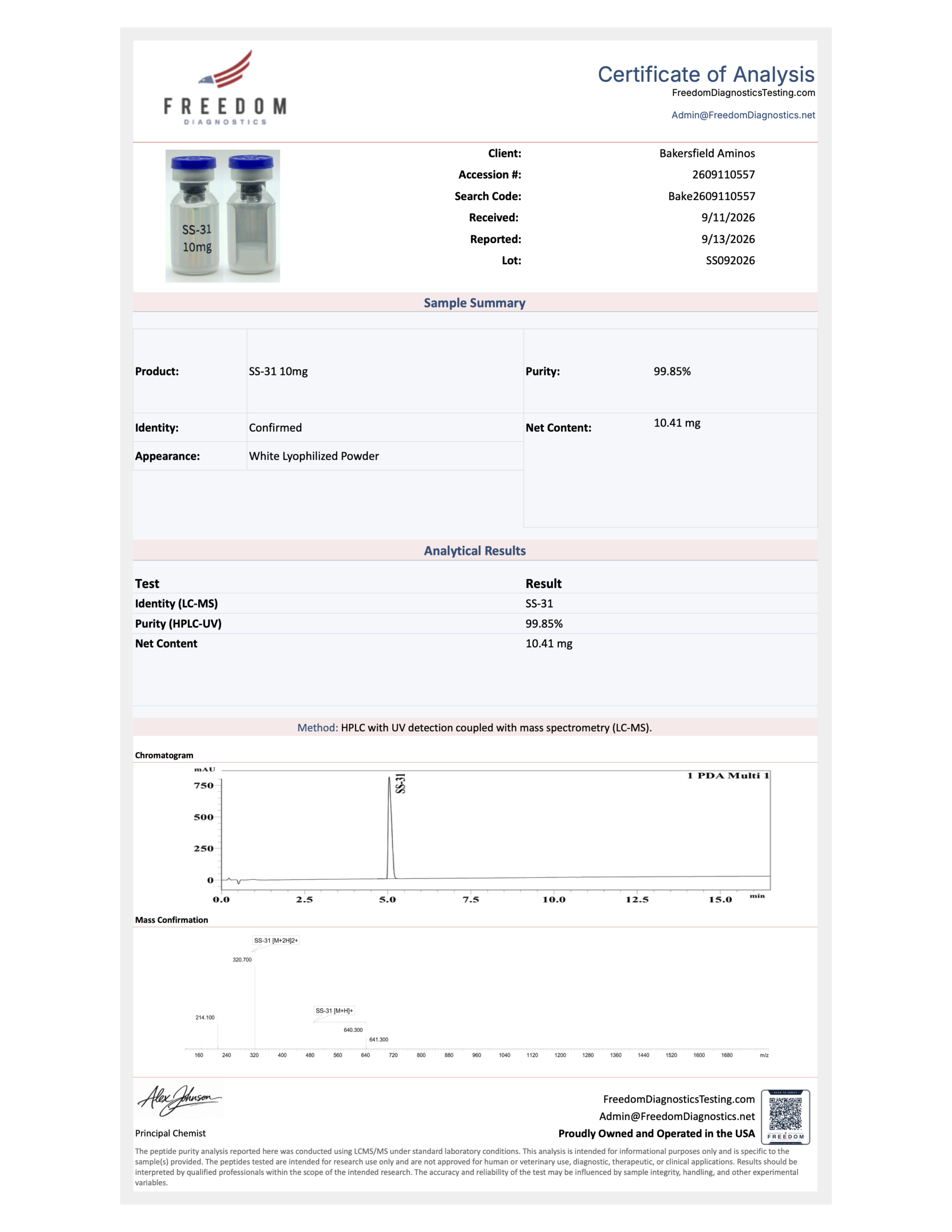
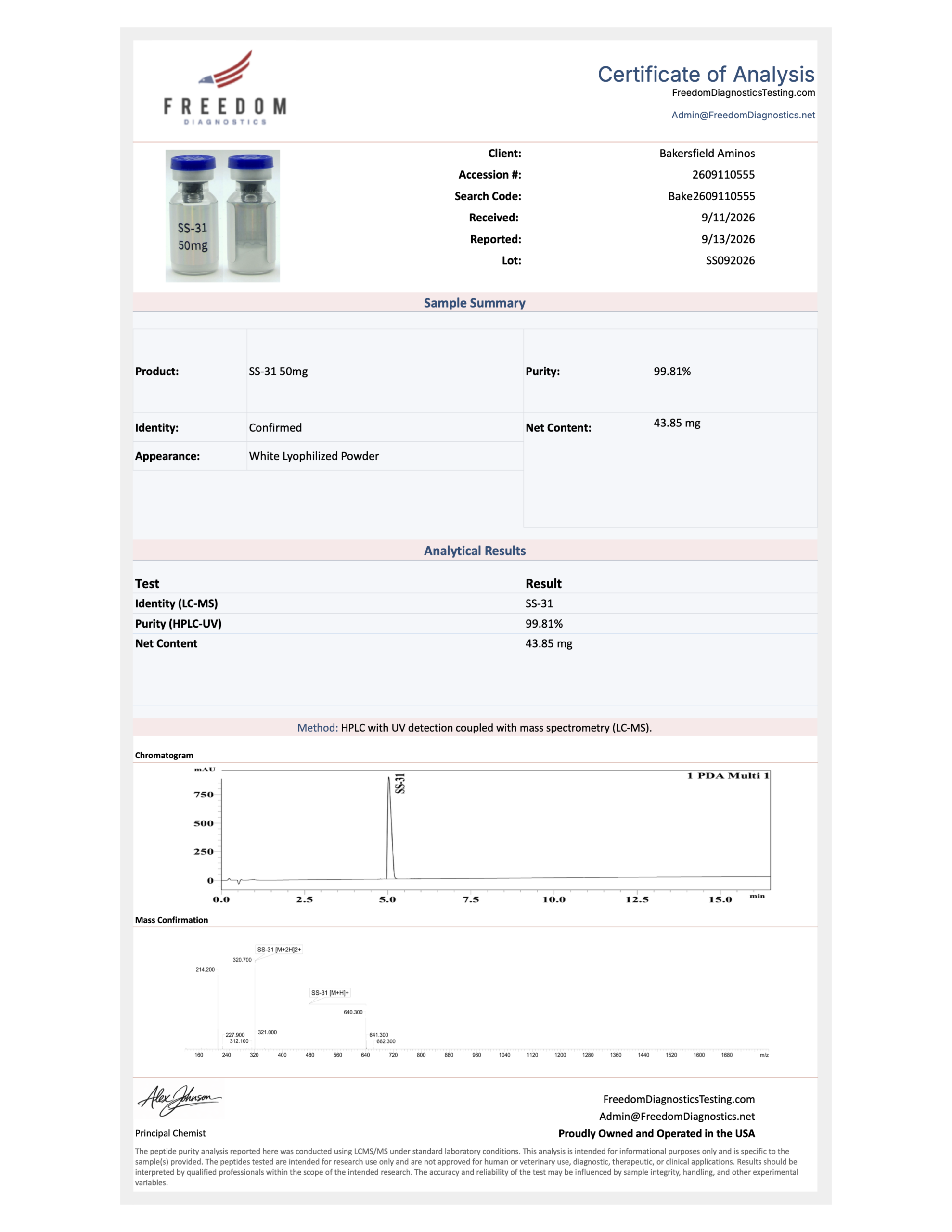
Compound identity and purity are important considerations when selecting BA-31 for experimental work. Researchers should refer to available batch-specific analytical documentation or a Certificate of Analysis (COA) for verified results. Purity, quantity, and other product specifications should be confirmed for the individual lot.
BA-31 is studied for its interactions with cardiolipin-containing membranes. Cardiolipin is a phospholipid concentrated in the inner mitochondrial membrane that contributes to membrane organization and the function of proteins involved in energy production. These interactions make BA-31 relevant to laboratory investigations of mitochondrial membrane properties and cellular bioenergetics. Research source
Experimental studies have examined BA-31 in relation to mitochondrial electron transport and ATP synthesis. ATP serves as a major energy carrier within cells, and its production depends on coordinated mitochondrial processes. BA-31 provides a research tool for exploring how membrane-associated interactions influence these processes in experimental systems. Research source
BA-31 has been investigated in studies involving cardiolipin-associated cytochrome c activity and oxidative membrane damage. These investigations examine the relationship between mitochondrial membrane chemistry, electron transport, and cellular responses to stress. Findings depend on the experimental model and conditions used. Research source
BA-31 is a synthetic peptide consisting of four amino acid residues. Research into its interactions with mitochondrial membranes includes biochemical, biophysical, and computational approaches, supporting investigations into the relationship between peptide structure and membrane behavior. Research source
Researchers should record the lot number, supplied quantity, analytical results, and preparation conditions associated with each experiment. Where available, batch-specific documentation should be reviewed before use to assess suitability for the intended protocol and support reproducible experimental conditions.
Follow the handling and storage instructions provided on the product label and accompanying documentation. Preparation methods, solvent compatibility, and stability requirements should be evaluated for the intended laboratory application. Avoid assuming that conditions established for other peptides apply directly to BA-31.
FOR LABORATORY RESEARCH USE ONLY
BA-31 supplied by Bakersfield Aminos is intended exclusively for laboratory research and development. It is not intended for human consumption, administration to animals, self-experimentation, or therapeutic, cosmetic, diagnostic, or other clinical applications.
This material should be handled only by qualified professionals trained in appropriate laboratory safety procedures. Consult available safety documentation and use protective equipment, storage practices, and disposal procedures appropriate to the material and experimental protocol.
Descriptions of mitochondrial function, energy production, and oxidative stress identify areas of scientific investigation. They do not establish the safety or effectiveness of this product for any medical purpose and should not be interpreted as claims to diagnose, treat, cure, or prevent disease.
Purchasers and researchers are responsible for ensuring that acquisition, storage, handling, and experimental use comply with applicable requirements and institutional policies.